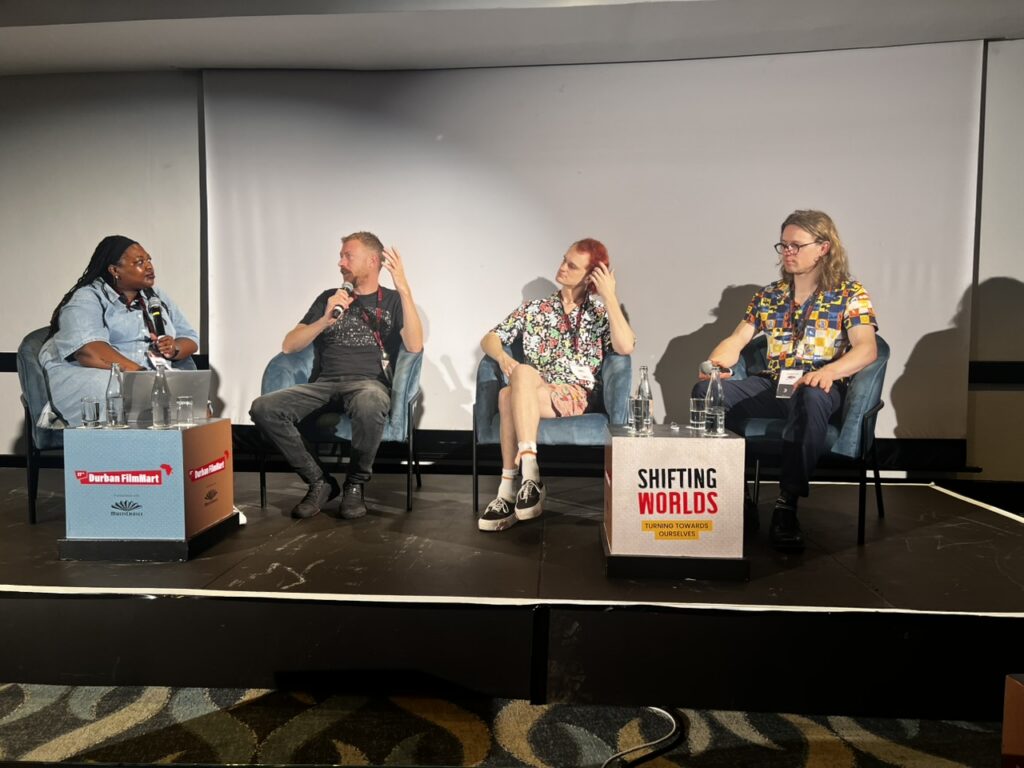
Sunday at Animation Days followed the story from first idea to final audience.
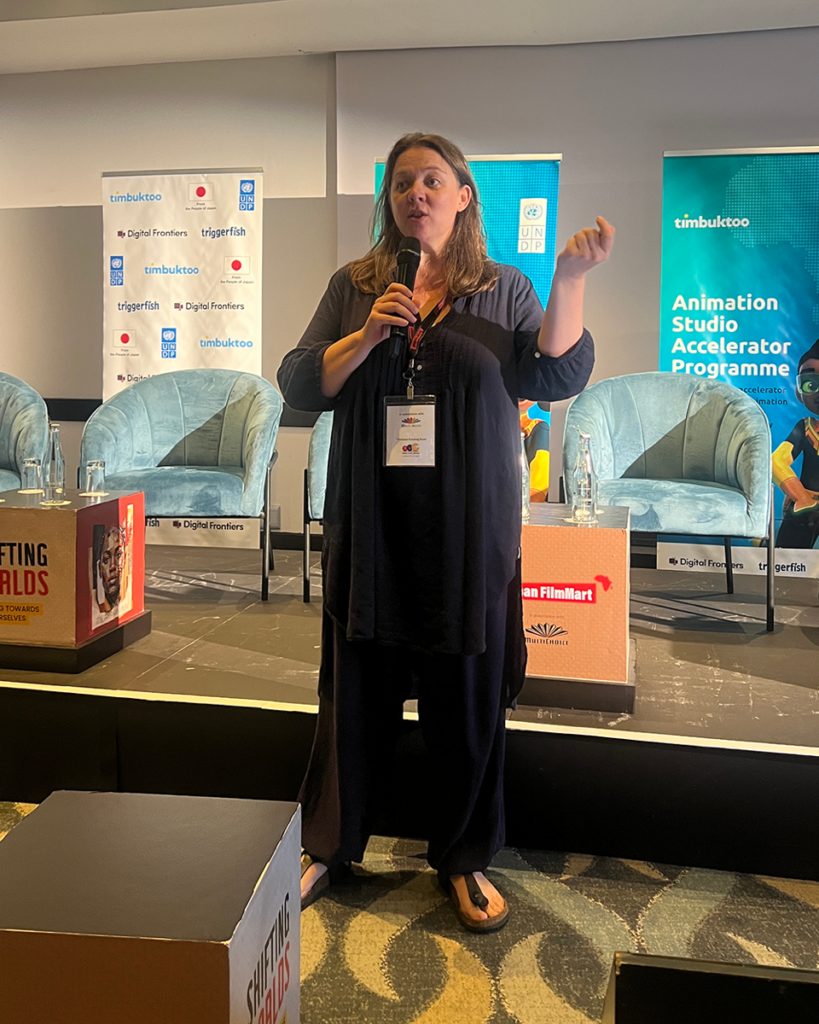

From a lockdown flat to the Emmy stage – Rick Treweek on building worlds:
Few people at this year’s Durban FilmMart can claim a Primetime Emmy from just weeks ago. Rick Treweek can.
On 5 September 2026, Uncanny Alley: A New Day won Outstanding Emerging Media Program at the 78th Emmy Awards in Los Angeles. The production is live immersive theatre performed inside the social VR platform VRChat. It is set in Uncanny Alley, a cyberpunk city that Treweek first built in 2020 from a Johannesburg flat during South Africa’s hard lockdown. He wanted a place where people who couldn’t gather could stand next to each other again. He developed the stage show with the LA-based Ferryman Collective, and it beat Blumhouse Enhanced Cinema and The World of Fallout to the award.
His route there was anything but linear. He grew up on a farm in Kokstad and started his career in animation at Triggerfish. He spent eight years in Singapore, moved through mobile games and returned to immersive tech. Today he runs Virtual Worlds Company from Kommetjie.
That makes him an ideal voice for Beyond the Screen, which looks at what film, animation, gaming and immersive creators can learn from one another about world-building, character and narrative. The session also explores how an IP can grow beyond its original format, which is the story of Uncanny Alley itself.
We asked Rick… Where can creatives go to find out more about building worlds that people can walk into, rather than just watch? “As a Filmmaker or animator, you should take a look at VR Chat , its a social VR platform with a large creative community , the platform acts like a unity multiplayer, there are Game developers, Filmmakers and avatar creators, there is instant feedback, networking and collaboration, this is how you can learn and and get involved.”
Treweek is joined by Eric Gardiner (Vetkoek Studios) and Jean Luc Chapell (Free Lives), with Wako Sefara moderating.


Drawing the line – Bill Masuku on authenticity, superheroes and who wants our stories:
Bill Masuku has spent a decade asking a simple question: what does an African hero actually look like?
The Zimbabwean comic book writer and artist founded Enigma Comix Africa, an independent publisher of homegrown comics. He began it at a time when almost no one on the continent was publishing local comic content. His self-published Captain South Africa reimagines the superhero for a modern South Africa. His Afromanga Tokoloshe Hunters was published by Etan Comics after a Kickstarter campaign that raised nearly five times its target.
His work now reaches far beyond self-publishing. Masuku has storyboarded for Triggerfish on a Netflix project and for Iwájú, Disney and Kugali’s three-time Emmy-nominated animated series. This month sees the release of Runeless, his middle-grade fantasy graphic novel for Disney Hyperion through the Kugali Ink imprint. He was named to the Forbes Africa Under 30 list in 2022.
That journey, from small-press comics to global studios, makes him a natural voice for Authenticity vs. Universality: Who Wants Our Stories? The world says it wants African stories. But wanting, developing, showcasing and commissioning them are four very different things. Creators are urged to be authentic while being asked to make that authenticity commercially legible to someone else’s audience. The panel discusses where they hold the line.
We asked Bill..When you take an African story to an international partner, where do you draw the line between staying authentic and making it work for a global audience? How has the festival circuit assisted you ?
Somewhere between the pitch and the treatment, there is a need to insert a personal “why” into what we do. That space is the connective tissue between the intention of authenticity and the practicality of it in the face of what we have been told is a global audience. The festival circuit makes those connections far easier to identify, when like minded people gather around the core belief that we can be both authentically African and globally successful.